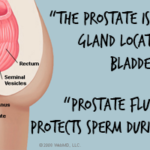
“According to a survey of men aged 45 and over by Prostate Cancer UK, 70% of them knew nothing about their prostate or the symptoms of prostate cancer.” – NHS – Know Your Prostate
Here is a very quick, rough post on a few of the most important bits and pieces about prostate cancer. I hope some of you found it useful or informative. If you’ve got any questions, feel free to ask via. reblog.
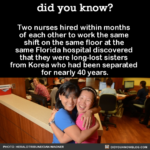
When older sister Holly was 9, she was adopted by a nurturing American couple with 9 other children, but she would often have nightmares and wake up in tears, saying “my daddy died, I have a sister, we need to find her.”
Holly’s mother contacted the orphanage, but found no records of a biological sister anywhere. Decades later, Holly’s husband contacted the orphanage again, and the results were the same. “But in my heart, I knew. I knew she was out there somewhere.”
“One of the patients told me there was another nurse named Meagan who was from Korea. She said you should talk to her, maybe you’re from the same town.”
They discovered many coincidences: born in Korea, missing family, “abandonment” listed on orphanage paperwork, adopted to Americans.
“I was like, this is too good to be true. I said we’ve got to do the DNA test, it’s the only way we’ll get the truth out of the whole thing.” The lab results came back, and the match was positive. “I’m like, this can’t be,” Holly recalls. “I was trembling, I was so excited, I was ecstatic.”
“I have this very strong belief that God must be …
Like, whatever I’ve done, I must’ve done something good in my life.”
Astronaut Scott Kelly is currently spending a year in space. Most expeditions to the space station last four to six months. By doubling the length of this mission, researchers hope to better understand how the human body reacts and adapts to long-duration spaceflight. During this one-year mission, Kelly is also participating in the Twins Study. While Kelly is in space, his identical twin brother, retired NASA Astronaut Mark Kelly, will participate in a number of comparative genetic studies.
Here are a few things that happen when astronauts go to the space station:
1. Your personal hygiene takes on a different form:
2. Sleeping arrangements might take some getting used to:
3. Internet services will remind you of the 90s:
4. You never have to do laundry:
5. You get to become immersed in a range of different cultures:
6. All of your water is recycled…yes…that means urine too:
omg there is a committee in our yard eating a possum i’m gonna try and get some photos
FOR THOSE OF YOU WHO ARE NOT AWARE A COMMITTEE IS A GROUP OF VULTURES there is NOT a bunch of people in my yard discussing business opportunities while occasionally picking at the carcass of a marsupial